
England and Wales.
Can You Board Over Loft Insulation?
You can consider storage boarding above suitable loft insulation, but the boards should not simply squash it down to joist level. The usual answer is a properly assessed raised deck that allows the insulation beneath to retain its installed depth. The roof’s ventilation, condition and supporting structure still need checking.
This matters when you want useful storage without undoing part of the insulation arrangement. A clear floor surface is not proof that the work underneath is right. Before boarding, establish what insulation is present, whether it is dry and intact, and which ventilation routes or services must remain accessible.
The short answer
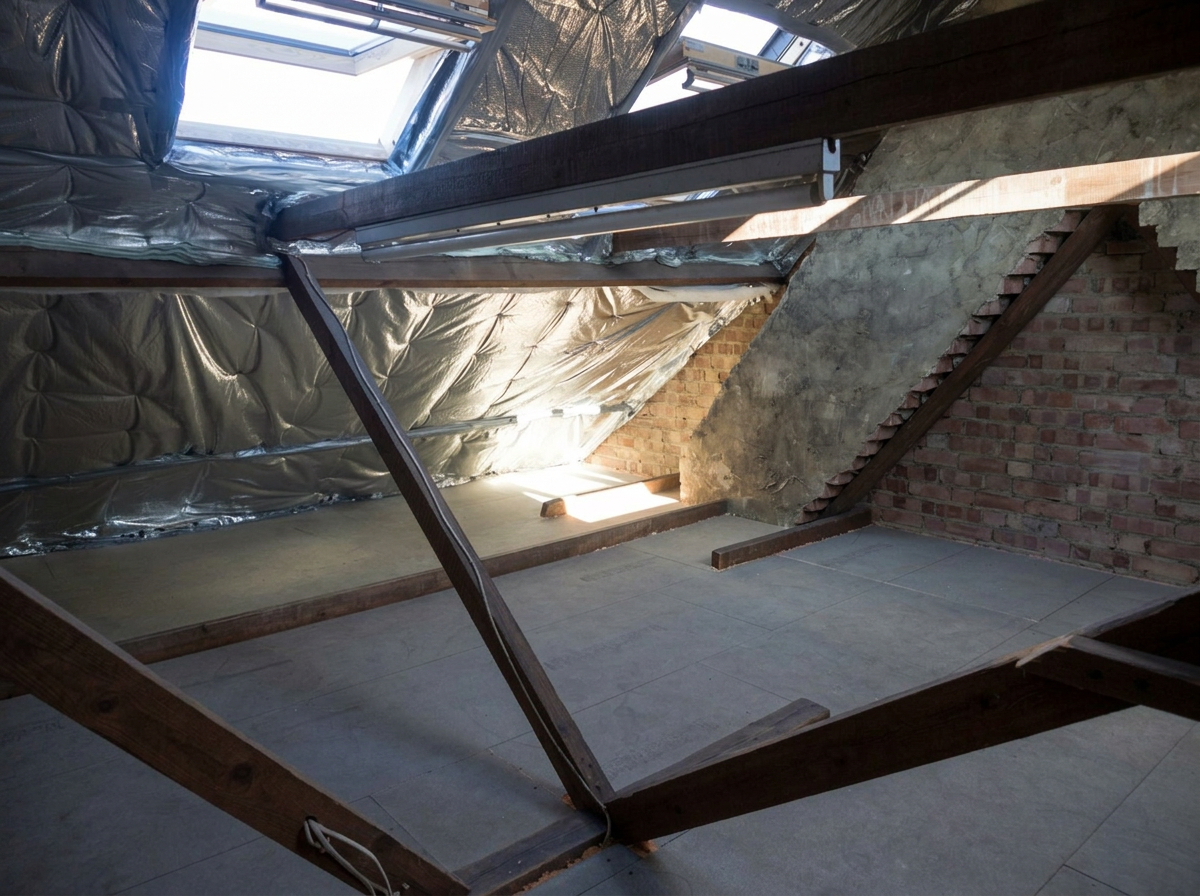
Board above insulation where an assessed construction allows it, not directly onto material that has to be compressed to fit. Raised supports can separate the deck from ceiling-level insulation. They need suitable timbers, compatible boards and fixings, and a layout designed for the intended loading. They are not a universal solution for every roof.
If the insulation already fits below joist level, that alone still does not establish that direct boarding is appropriate. The structure and ventilation need consideration, as does any planned insulation upgrade. The useful question is not whether a board physically fits, but whether the finished arrangement remains suitable for the roof and safe for the intended storage.
What compressing insulation does
Squashing insulation changes its installed thickness and can reduce its intended thermal performance. Council guidance warns against compressing mineral wool beneath a storage deck. We do not turn that advice into a universal percentage-loss claim: different materials and levels of compression would need their own evidence.
It can be tempting to force boards down because the existing joists provide an obvious fixing line. That shortcut ignores the insulation depth. A raised design considers the current material and any proposed changes before setting the deck level. Wet or damaged insulation also needs investigation; lifting boards above it does not resolve an existing roof leak.
What it does to ventilation
Loft insulation should not be pushed into ventilation openings at the eaves, and new boards must not obstruct the required roof arrangement. Ventilation helps manage moisture, while the position and continuity of vapour-control layers also matter. Covering the whole loft without understanding those details can create problems even if the boards look tidy.
A raised deck can provide separation, but the supports do not automatically guarantee the correct air path. Roof membranes, insulation location and existing construction influence the necessary detail. If you see staining, damp insulation or condensation, get the cause checked before installing a deck over the area. Do not assume raising the floor cures every moisture issue.
How to board a loft without losing insulation
Start with an assessment of the loft rather than a shopping list of boards. Identify the supporting timbers, insulation, hatch access, headroom and services. Agree what will be stored and where. A suitable raised support system can then be specified with its compatible board and fixing arrangement, following the relevant manufacturer instructions.
Keep inspection points and equipment accessible. Wiring junctions, pipes and downlights need particular attention, including any clearance required by their own instructions. Electrical problems should be dealt with by a suitably qualified person before boarding conceals them. Do not cut roof bracing or ceiling joists to gain more storage space.
A partial deck may be enough: a safe approach from the hatch and an agreed storage area can be more useful than difficult corners under the eaves. Once installed, follow the stated loading restrictions and distribute belongings appropriately. A storage deck is not a structural conversion floor and should never be used as a bedroom simply because boards have been fitted.
What it costs to do it properly
The price depends on the area, chosen supports, access, preparation and any work to the hatch or ladder. A board-only figure is not directly comparable with a raised arrangement including additional components. Ask for the scope and tax treatment in writing, and identify optional access work separately.
Our cost page contains the supplied UK market examples as a clearly marked draft because their publication source and VAT basis need confirmation. They are not Cozy Home Solutions quotations. Rather than budgeting from an unverified average, describe the property and storage needs so the team can discuss the assessment required for a project-specific proposal.
Getting it checked
If you already have boards, an assessment can consider their support, condition and what lies beneath them. Existing boarding does not prove the roof was checked when it was installed. Avoid piling in heavy belongings until you understand the intended loading and access restrictions. If a structural question arises, appropriate professional advice may be needed.
For a new enquiry, provide your postcode and explain whether you need storage, insulation improvement or both. Mention restricted access, known damp or an existing ladder so the discussion starts with the real property. Cozy Home Solutions takes enquiries across England and Wales and is based in Cowley, Oxford.
The linked raised-boarding page explains the support arrangement in more detail. The main insulation hub describes multifoil as a separate service, because a roof lining does not itself solve boards compressing ceiling insulation. We will not invent town-specific jobs or claim local photographs are loft installations when they actually show solar panels.
Common questions
Can I put boards directly on top of mineral wool?
Not where fitting them requires squashing the insulation. A suitable raised arrangement can keep the storage deck above it, subject to checks on the roof structure, ventilation, condition and intended loading.
Should I remove insulation to make room for boards?
Do not remove insulation simply to fit a deck without assessing the resulting roof arrangement. Consider a suitable raised system and any planned insulation work together so storage does not compromise the intended thermal construction.
Will loft legs solve an existing damp problem?
No. They provide support within a raised deck; they do not repair leaks or establish that ventilation is correct. Existing damp should be investigated and the relevant roof details checked before the area is covered.
Can I cover wires and downlights with boards?
Services and their required clearances must be assessed. Equipment and inspection points need access, and any necessary electrical work should be resolved first. Do not conceal wiring or lighting details blindly beneath a storage deck.
How do I get a boarding quotation?
Select loft boarding in the enquiry form and provide your contact details and postcode. Describe the storage you need when the team contacts you. The proposed work, assessment terms, exclusions and price should be agreed before installation.