
England and Wales.
Loft Insulation with Multifoil
Multifoil insulation is a flexible layered material used within a designed construction. Reflective faces and separating layers contribute to the thermal arrangement, but the product cannot be judged from its thickness alone. Performance depends on the material, the air spaces and the rest of the roof, wall or floor build-up.
Cozy Home Solutions offers multifoil insulation enquiries across England and Wales. We discuss the intended application before selecting a detail. This is not a claim that one foil product suits every home or that a single sheet automatically meets building regulations. The current manufacturer instructions and the property’s construction have to be considered together.
What multifoil insulation is
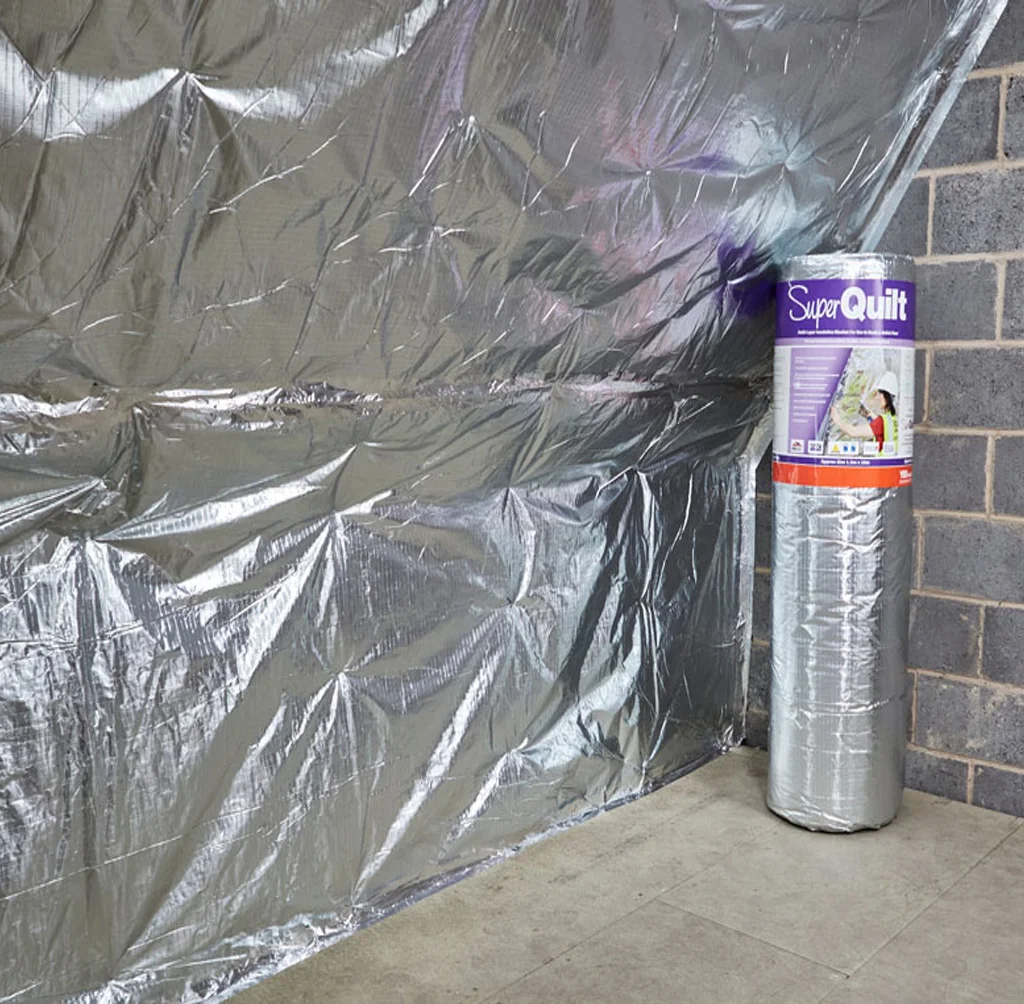
A multifoil product contains several different layers rather than a single rigid slab or a loose fill. SuperQuilt, the named product in our brief, is described by the current manufacturer as a reflective construction combining foil-related layers and wadding. Its flexibility can be useful around suitable timber constructions, but it still needs careful fitting and protection.
R-value describes thermal resistance. A material’s core value and an assembly value including specified air spaces are different things. An attractive headline roof or wall value must be tied to the assessed installation detail. We do not translate multifoil performance into a mineral-wool thickness comparison, because that would obscure the construction and test basis.
Where it works best
The manufacturer describes SuperQuilt for roof, wall and floor applications subject to project design requirements. That broad list does not mean every build-up is approved, or that every application can use the same installation detail. A roof slope, a cold loft ceiling and a wall lining are distinct situations with different moisture and ventilation considerations.
The practical question is whether the proposed assembly gives the required performance while remaining suitable for the building. Space limitations may make a flexible product worth considering, but they do not justify ignoring fire restrictions or moisture control. Discuss the existing materials, intended finish and any other insulation before deciding where multifoil belongs.
How it is fitted
The current manufacturer technical sheet describes fixing SuperQuilt to timber, overlapping adjoining material and sealing with aluminium foil tape. The complete assessed construction still determines the air spaces, additional materials and edge details. The installer must use the instructions for the supplied product version, not a remembered detail from another foil product.
Continuity matters at joins, edges and penetrations. Where the product forms part of the vapour-control arrangement, gaps or unsealed details can undermine the intended construction. It also needs protection as required by the manufacturer. The fitting proposal should identify what will be installed, where it sits and how the finished lining or covering will protect it.
Multifoil with existing insulation
Existing insulation may be retained if its condition and the new assembly are suitable, but combining products is a design decision. Adding a layer without understanding moisture movement can change the behaviour of the roof. Damp, leaks or damaged materials should be investigated rather than hidden behind a new reflective lining.
An assessment needs to establish the thermal boundary and the existing vapour-control and ventilation details. The required assembly value cannot be obtained by adding marketing numbers from unrelated installation examples. Any calculation should use the actual materials and relevant assessed conditions. The quotation should explain what is retained, replaced or added.
Multifoil against mineral wool and rigid board
These materials have different handling, fitting and application characteristics. Mineral wool commonly sits between or above ceiling joists in cold lofts. Rigid boards are used within specified constructions. Multifoil relies on its own assessed arrangement, which may include air spaces and other insulation. None should be chosen only because it sounds thinner or easier to carry.
Compare the whole construction: thermal performance, moisture control, fire requirements, installation access and the finished use of the space. A product that suits one roof detail may be unsuitable elsewhere. We do not claim multifoil universally outperforms other insulation or promise a saving without knowing the current building and the proposed improvement.
What it will not do
Multifoil is not a repair for leaking roofing, rotten timbers or an unsafe electrical installation. It does not create a structural storage floor, make a loft habitable or remove the need for any required approval. Installing it alone does not prove a project complies with building regulations; suitability must be established for the actual construction.
The current manufacturer warns against using SuperQuilt in external walls of buildings over 11 metres. This is a manufacturer restriction, not permission to use it everywhere below that height. Fire requirements and other restrictions must still be checked for the building and application. No blanket non-combustible or fireproof claim is made here.
For practical storage above ceiling insulation, raised boarding may be a separate part of the proposal. Do not assume a foil lining solves compression caused by boards below it. Our boarding pages explain how a storage deck is assessed without treating roof insulation as a surface to flatten. If you want both services, select the combined interest in the enquiry form.
Common questions
What is multifoil insulation?
It is a layered reflective insulation material used within a specified roof, wall or floor construction. Its performance depends on the product and the complete installation arrangement, not just the number of layers or thickness.
Can multifoil be used on its own?
That depends on the assessed construction and required performance. Do not assume it can replace every other layer. The current manufacturer instructions and any applicable design or building-control requirements must be checked.
Does foil insulation work in a loft?
It can be considered within a suitable loft or roof construction. The existing thermal boundary, ventilation and moisture-control arrangement determine how it can be used. A roof-slope detail is not automatically appropriate for a cold loft ceiling.
Can you fit multifoil over existing insulation?
Possibly, if the existing material is suitable and the resulting assembly is correctly designed. Moisture movement, existing damp and the required air spaces need assessment before materials are combined.
Does multifoil need an air gap?
Reflective assembly performance depends on the air spaces specified in the relevant assessed detail. Their size and position should be taken from current product documentation for the intended application, not from a universal rule.