
Solar Panels in Oxfordshire: A Homeowner's Guide
Written by the team at Cozy Home Solutions, an MCS-certified installer based in Cowley, Oxford. This guide covers what actually decides whether solar works on an Oxfordshire home, the local rules that catch people out, and the questions worth asking before anyone quotes you.
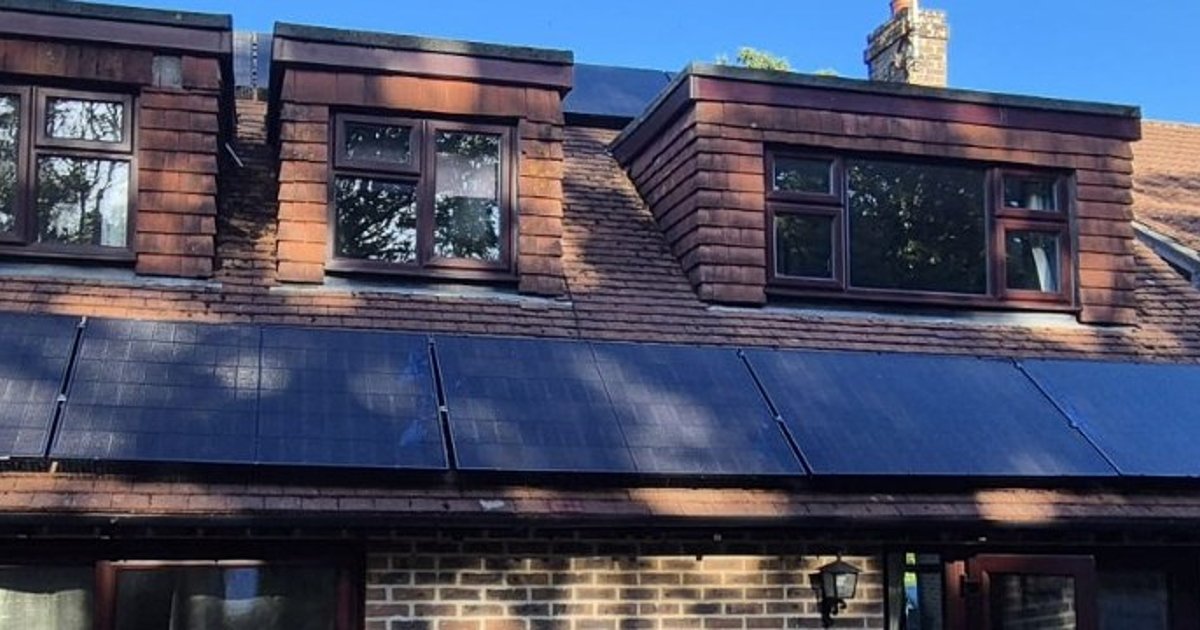
Is an Oxfordshire roof actually suitable for solar?
A suitable roof is not simply a roof with room for panels. It needs a useful exposure to daylight, a sound covering and structure, and a safe way to install and maintain the equipment. The design should reflect the home underneath it, rather than filling every available patch of roof.
An aerial image can help start a conversation, but it cannot confirm the condition of roof timbers, hidden damage or how a neighbouring tree shades the roof through the seasons. A proper survey involves attending the property. Our roof suitability guide gives you a useful starting checklist.
Orientation and pitch
A south-facing roof is an obvious starting point, but it is not the only workable arrangement. Moving away from due south changes when the panels receive their strongest sunlight. An east-facing slope tends to generate earlier, while a west-facing slope shifts generation towards later in the day. That timing can matter to a household as much as the overall yield.
Pitch changes how sunlight reaches the panels and how a mounting system is designed. Neither orientation nor pitch should be judged in isolation. Ask the surveyor to explain the proposed layout, the assumptions behind the generation estimate and why that layout suits your electricity use. A north-facing slope needs careful assessment rather than a blanket promise.
Shading, trees and chimneys
Mature trees, nearby buildings, chimneys and roof features can make apparently generous roof space less useful. The shadow you see during a visit is only part of the picture. Seasonal foliage and the sun's changing position also matter. Ask which parts of the roof are affected and how that has changed the design.
Equipment intended to manage uneven shading is not a substitute for sunlight. It may help a suitable layout, but it cannot make a heavily shaded position behave like an unobstructed one. Do not assume a protected tree can be cut back simply to accommodate panels. Resolve any permissions before treating pruning as part of the proposal.
Roof condition and age
Loose tiles, damaged slates, failing felt or signs of leaks deserve attention before installation. Age alone does not tell you whether a roof is sound. The survey should consider its actual condition, the supporting structure and whether the proposed fixings suit the covering.
If the roof needs recovering, doing that first usually avoids removing and refitting panels later. Ask who will assess any doubtful structure and whether roof work sits outside the solar quotation. A clear answer now is preferable to discovering an unresolved roofing problem after scaffolding has arrived.
The housing stock problem in Oxfordshire
Oxfordshire homes do not share a standard roof. Terraces in East Oxford and Jericho, traditional stone buildings in West Oxfordshire, thatched village homes and modern estates present different questions. These examples describe housing types, not a claim that every home in an area has the same construction or planning status.
Victorian and Edwardian terraces
On an older terrace, usable space can be interrupted by chimneys, dormers and changes made by previous owners. Roof timbers and coverings need checking, and access may be awkward where there is no side passage. The installer should explain how scaffolding, materials and cables will reach their positions without assuming access over neighbouring land.
A rear roof may offer a less prominent location, but that still needs checking for light, structure and permissions. Being less visible does not automatically make an installation acceptable. Our guides to solar on listed buildings and solar in conservation areas explain why designation and location need separate attention.
Cotswold stone and stone slate roofs
The appearance of a stone building does not tell you what its roof covering is. Stone slates, natural slate and other coverings require different fixing details. Ask how the mounting method protects the roof's weather resistance, accommodates the covering and transfers loads into suitable structure. Fragile material should not be treated as ordinary interchangeable roof tile.
For traditional village buildings, including thatched homes, there is no sensible standard promise that panels can go straight onto the existing roof. A different position may need investigating, with specialist roofing and planning advice. The survey should establish what is practical, rather than adapting the building to a layout chosen in advance.
Modern estates and new builds
A newer roof can be straightforward, but newer does not mean unrestricted. Roof features, shading, existing equipment and planning conditions still matter. Check whether a warranty or developer requirement affects alterations, and ask how the system will fit alongside any equipment already specified for the home.
Our new build solar guide covers that coordination. Where a garage, extension or other flat roof is being considered, read about solar panels on flat roofs. The supporting structure, mounting approach, weatherproofing and planning position need assessing for that particular roof, not borrowing assumptions from the main pitched roof.
Planning permission and conservation areas in Oxfordshire
Domestic rooftop solar is often permitted development, meaning a separate planning application may not be needed if the applicable conditions are met. That is not permission to disregard restrictions. Listed status, planning conditions and directions removing permitted development rights can change the position for an individual property.
Conservation-area designation does not automatically prohibit panels on a roof facing a road. The general national restriction concerns solar equipment on a wall or balcony facing a highway, rather than a roof simply because it is a principal elevation. Flat-roof proposals can have additional requirements. Check the actual proposal instead of relying on a rule repeated without its context.
On a listed building, work affecting its special architectural or historic interest requires listed building consent. Planning permission may also be needed. A less visible position is worth discussing, but is not a guarantee of consent. Talk to the authority before committing to work, and obtain any required consent before it begins.
The relevant residential planning authority depends on the property's address:
- Oxford City Council
- Cherwell District Council
- South Oxfordshire District Council
- Vale of White Horse District Council
- West Oxfordshire District Council
A competent installer should raise these questions at survey. The homeowner should confirm the position with the relevant authority, particularly where designation or earlier permissions are unclear. The Planning Portal's solar guidance and Historic England's advice are useful starting points, not substitutes for a property-specific decision.
Connecting to the grid: what SSEN approval means
Scottish and Southern Electricity Networks, usually shortened to SSEN, operates electricity distribution networks in Oxfordshire. The operator for a particular home should still be confirmed from its address using the official distributor checker. Your network operator is not necessarily the company that sends your electricity bill.
There are different connection routes. Some installations can be commissioned and then notified to the network operator. Others need an application and approval before installation. The appropriate route depends on the proposed equipment, the existing supply and the connection requirements. It is not determined simply by counting the panels.
The installer should identify the route and handle the necessary submission. Ask what has been applied for, whether a decision is outstanding and how any conditions affect the design. This is a normal part of solar installation, not evidence that something is wrong. A larger or more complex proposal can add time while network requirements are resolved.
An export limitation device controls how much electricity the system sends into the network. It is sometimes used where an agreed export limit forms part of the connection arrangement. It does not create extra generation or guarantee that every surplus can be exported. Ask how the limit is set, how the equipment is commissioned and where the approved arrangement is recorded in your handover documents.
Does a battery make sense on an Oxfordshire home?
A battery stores electricity for later use. With solar, that can mean keeping daytime generation for the evening instead of exporting it as it is produced. The useful question is when your household needs electricity and whether there is a surplus available to store. A large roof alone does not establish that a large battery is appropriate.
Start with your pattern of use: people at home during the day, cooking and appliances in the evening, and changes you already expect. Capacity, usable storage and the rate at which a battery can deliver electricity are different things. Ask the installer to explain each without treating a model name as a complete answer.
Read our guide to choosing a solar battery size and use the battery size calculator as conversation starters. They do not replace a survey or a design based on your circumstances. Our battery or no battery guide helps separate a useful addition from something you do not currently need.
For a home with existing panels, battery retrofit may be possible. Compatibility, existing equipment and available space need checking first. If you charge an electric car at home, tell the surveyor when the car is usually parked there. Daytime charging can use generation directly; evening charging creates a different demand. Solar, household storage and charging controls should be considered together, not as unrelated purchases.
Exporting what you don't use
The Smart Export Guarantee provides a route for eligible households to receive payments from participating suppliers for electricity exported to the grid. Suppliers offer their own tariffs, and rates, eligibility requirements and contract terms vary. Compare current offers yourself rather than assuming the supplier of your imported electricity is automatically the best export choice.
For a typical domestic solar application, MCS certification or accepted equivalent evidence and suitable export metering are normally required. Your chosen supplier decides whether its criteria are met. Keep your installation documents available, check how export readings will be obtained and establish when the tariff starts. Exporting electricity and having a payment arrangement are not the same step.
Our Smart Export Guarantee guide explains the questions to ask. Ofgem's guidance for generators provides the official overview. When comparing quotations, focus on roof access, mounting, electrical work, equipment and connection requirements as drivers of cost, not a headline package. The separate VAT guidance for solar installations may also help you understand a quotation; confirm the treatment of your own project.
Insulation first, or panels first?
Reducing what a home wastes is sensible alongside generating electricity, but insulation and solar address different needs. Neither should be presented as a replacement for the other. If loft work is planned, discuss it before fixing equipment positions or cable routes. Later work can be awkward where installers need the same access or storage space.
Our loft boarding service and multifoil loft insulation service are separate options. Coordinate access, ventilation and safe clearances around electrical equipment before either job starts. The sensible order depends on the property and the work proposed, rather than a universal rule that every loft must be finished before solar can be considered.
Choosing an installer in Oxfordshire
Use the same checklist whoever you are considering. A clear quotation should follow an assessment of the property and explain what is included, what remains to be checked and who is responsible for each stage. A reassuring conversation is useful, but the important commitments should also be written down.
- Check MCS certification for the installer and proposed work. Ask how the completed installation will be certified, because that evidence matters when applying for an export tariff.
- Ask which consumer code the company belongs to and what the membership covers. Verify the membership rather than relying only on a logo.
- Ask whether work is carried out by employees or subcontractors. Neither answer alone establishes quality; identify who supervises the job and who is responsible if something needs correcting.
- Confirm that a surveyor physically attends before a firm quotation. Ask which roof and electrical checks are included and which require separate specialist advice.
- Request a description of the handover pack. It should explain operation, certification, network paperwork and the warranties relevant to the installed equipment.
- Separate workmanship cover from product warranties. Ask who honours each, how to make a claim and whether labour or removal is included when equipment needs attention.
- Confirm who handles the network application or notification and who keeps the approval and commissioning records. Do not leave that responsibility as an assumption.
It is reasonable to ask for clarification before signing. Compare the proposed layout and exclusions as carefully as the equipment brand. A design that leaves a difficult roof section unused may be more sensible than one that treats every space as suitable. Keep copies of the agreed design and any changes made during installation.
Questions Oxfordshire homeowners ask
Do I need planning permission for solar panels in Oxfordshire?
Domestic rooftop solar is often permitted development if the applicable conditions are met. Listed status, planning conditions and property-specific restrictions can change that position. Confirm your proposal with the relevant local planning authority before committing.
Can I put solar panels on a listed building?
It may be possible, but the building and proposed location need individual assessment. Work affecting its special architectural or historic interest requires listed building consent, and planning permission may also be needed. Speak to the authority before work starts; a hidden position does not automatically remove the need for consent.
Will solar work on a north-facing or shaded roof?
These roofs need careful assessment because orientation and shade affect useful generation. A survey should consider the actual layout, seasonal shadows and alternative positions. Equipment that manages shading cannot replace sunlight, so ask for the reasoning behind the recommendation.
Who is the grid operator for Oxfordshire?
SSEN operates distribution networks in Oxfordshire, but the operator for your home should be confirmed from its address. Use an official distributor checker rather than assuming your electricity supplier is the network operator. Your installer should identify who receives the connection submission.
Do I need a battery to benefit from solar?
No, a battery is not essential to use electricity generated by solar panels. It changes when stored electricity is available, which may help a household with evening demand. Whether it suits you depends on your use, available surplus and the proposed system.
Can panels go on a Cotswold stone or slate roof?
A suitable design may be possible, but the actual covering and supporting structure need checking. The fixing method must suit the roof and preserve its weather resistance. Historic character, listed status and planning restrictions may also affect the acceptable position.
How long does an installation take?
The programme depends on access, roof work, equipment, electrical changes and any approvals needed. Ask for a schedule that distinguishes preparation, installation, commissioning and handover. Do not assume the time spent fitting panels is the whole project.
What happens if I move house?
Keep the system documents, network paperwork and warranty information available for the buyer and conveyancer. Check the terms of warranties and export arrangements rather than assuming they transfer automatically. Make sure the buyer understands how to operate the equipment and who to contact about the export tariff.
Where we work in Oxfordshire
Cozy Home Solutions serves homeowners across Oxfordshire from Cowley, Oxford. Local service pages are linked below where an existing page is available. These links describe coverage, not a claim that an installation has been completed in every place. For the wider area, see our Oxfordshire installation page and Oxford solar installation page.
- Oxford
- Abingdon
- Banbury
- Bicester
- Didcot
- Witney
- Kidlington
- Thame
- Wantage
- Carterton
- Henley-on-Thames
- Chipping Norton
- Woodstock
- Wallingford
- Faringdon
Talk to someone who surveys roofs in Oxfordshire
Tell us about your roof, any existing panels and the work you are considering. We can discuss what needs checking at a survey before a system is proposed.
Unit 2, Old Station Yard, Watlington Road, Cowley, Oxford, OX4 6FE
0800 688 9666
admin@cozyhomesolutions.co.uk