The Warm Homes Loan Scheme Explained
The Warm Homes Loan Scheme is a government-supported loan scheme delivered through participating lenders for eligible home energy improvements. It is a loan, not a grant to homeowners. It supports up to £15,000 for solar panels and up to £15,000 for battery storage, with MCS-certified equipment and installation required. Insulation, windows, doors and roofing are not covered.
Warm Homes guidance for your area
What is the Warm Homes Loan Scheme?
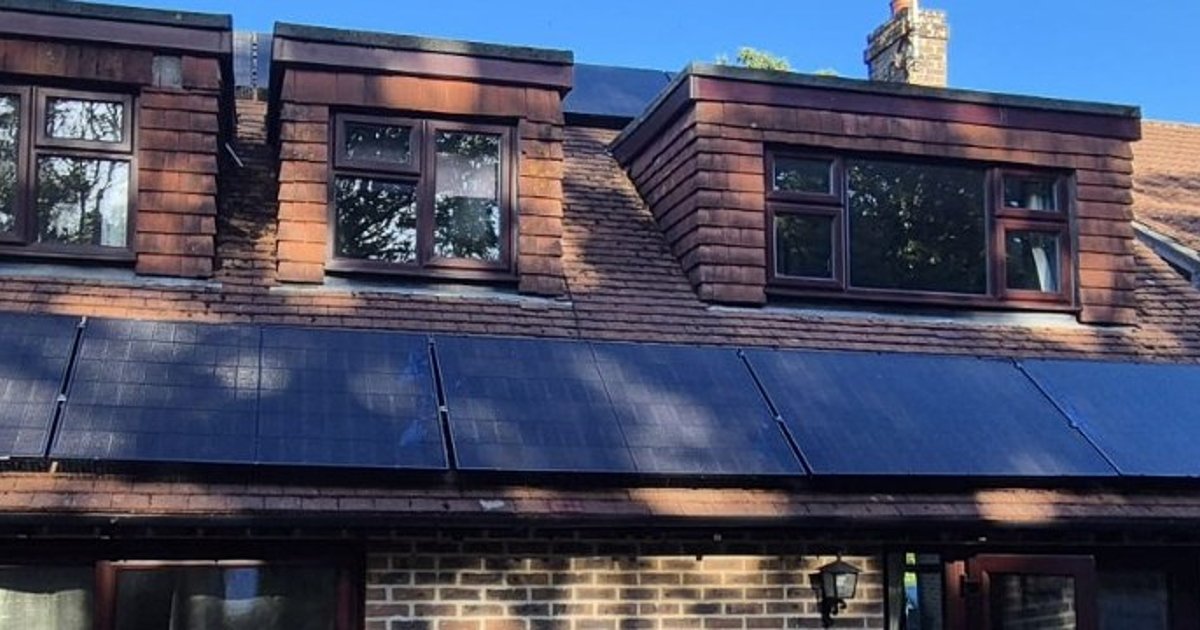
The Warm Homes Loan Scheme is a government-supported loan scheme for eligible home energy improvements, delivered through participating lenders. For solar panels and battery storage, it requires an MCS-certified product fitted by an installer certified for the relevant technology.
The Department for Energy Security and Net Zero, usually shortened to DESNZ, sets the scheme rules. The scheme sits within the government's Warm Homes Plan. Its purpose is to support access to borrowing for eligible improvements, rather than to give every homeowner money towards any work they want to do.
The distinction between the government and the lender is important. Government support goes to the participating lender after the installation has been completed and verified. Your agreement is with the lender, and you remain responsible for repayments under that agreement. Government support does not mean that the government underwrites your individual loan or makes the lending decision.
You may see the name written as the "warmer homes loan scheme". The official name is the Warm Homes Loan Scheme. Use that name when looking for the current government guidance so you do not confuse it with a different home improvement grant or a commercial offer.
Start with the improvement, not the borrowing. A solar proposal should explain what fits your roof, how shading affects the design and how your household uses electricity. A battery proposal should explain compatibility, siting and the way it will be operated. A loan does not make an unsuitable installation suitable.
Our solar panel installation service and home battery storage service both start with a survey. This guide explains the scheme separately from that assessment; it is not a personalised finance recommendation or a promise that an application will be accepted.
Is the Warm Homes Loan Scheme a grant?
No. The homeowner takes out a loan and repays it; the non-repayable government grant goes to the participating lender, not directly to the homeowner.
| Grant | Loan |
|---|---|
| Reduces what you pay | Changes how and when you pay |
| Usually means-tested | Credit and affordability checks |
| Paid to you or installer | Repaid by you over time |
This is a general comparison, not a description of every grant available. Individual grant programmes have their own rules about recipients, means testing and eligible work. A reference to a grant in the scheme's lender rules should not be read as an offer of free solar panels or a free battery for the homeowner.
The support enables the lender to offer reduced-rate borrowing within the scheme rules. You should still read the actual agreement carefully. Check the total amount repayable, any fees, whether the agreement is secured against your property and what happens if your circumstances change. Different products can have different conditions even when they support the same improvement.
Do not assume another public grant can be used to fund the same work alongside a scheme loan. Tell the lender about any existing or proposed public funding and ask it to confirm the position for your installation. Keep the written explanation with your quotation and agreement.
How much can you borrow under the Warm Homes Loan Scheme?
The government factsheet lists a supported loan cap of up to £15,000 for solar PV and up to £15,000 for electrical battery storage. An EV charger can be an eligible ancillary cost only as part of a solar or battery installation, not on its own.
Insulation, windows, doors and roofing are not covered by the Warm Homes Loan Scheme. They are not made eligible simply by adding them to a solar or battery quotation.
These are scheme caps, not quotations, guaranteed lending amounts or recommended budgets. The lender decides whether it will offer a product for your proposed work and how much it is willing to lend. The installation must meet the scheme requirements, and you must meet the lender's own checks.
Eligible associated installation costs must fit within the relevant measure cap. The detailed rules describe items such as scaffolding, installation safety equipment and grid connection for solar, and suitable integration and protective electrical equipment for batteries. Roof replacement or structural preparation is separate from those eligible costs.
For an EV charger included in the proposal, the rules require an OZEV-approved residential chargepoint and approved installer. Do not assume that every charger or every installer meets that requirement. Ask the lender and installer to confirm the exact equipment and certification before including a chargepoint in an application. Our EV charging page describes our installation service, not proof of scheme eligibility for an individual charger.
An itemised quotation helps distinguish eligible equipment, installation work and anything outside the scheme. For insulation, see our insulation service, which is not covered by this loan scheme. Keep any separate insulation proposal clearly separate from a supported solar or battery loan.
Who is eligible for the Warm Homes Loan Scheme?
The scheme rules cover owner-occupiers of existing domestic properties and private rented sector landlords across England, Scotland, Wales and Northern Ireland. There is no government income threshold, but lenders apply their own affordability, credit and product checks.
A property being in an eligible country does not guarantee approval. Participating lenders can choose which eligible borrower groups and measures their products support. They may ask for additional evidence and can decline an application or offer different terms. Ask about the relevant product before assuming that a general statement about the scheme applies to you.
Owners of multiple properties may apply for a loan for each property under the scheme rules. Each proposal still needs to satisfy the lender's requirements. Landlords should explain the property's use, who owns it and what installation is proposed, rather than treating acceptance for one address as approval for another.
The scheme is for domestic improvements. If the property has a mix of residential and business use, explain that to the lender. The rules focus on installations principally intended to meet the energy needs of the domestic household; do not assume that a commercial installation qualifies because it is on a property you own.
Cozy Home Solutions installs across England and Wales. The scheme's UK-wide scope does not extend our installation coverage to every UK nation. Use our areas we cover page to find the relevant service information, and discuss your address with the team before booking a survey.
When can homeowners apply for the Warm Homes Loan Scheme?
GOV.UK now publishes participating-lender and application guidance for the scheme. Homeowners should check current availability with a participating lender and apply through its accepted application route, not send a loan application to the government.
The DESNZ factsheet was published on 27 October 2026. That publication date is verified; it is not evidence of the exact date on which every lender began accepting applications. We do not present an unverified launch day or scheme closing date as a settled fact.
The detailed rules describe a shared central fund, drawn down by participating lenders on a first-come, first-served basis. Availability therefore depends on the current scheme position and the lender's product. It should not be assumed to remain available for any particular future period.
Before applying, read the official homeowner application guidance. Ask the lender what documents it requires, whether your chosen installer is accepted and what must happen before installation can begin. The government's factsheet notes that some lenders partner with particular installers while others allow a choice of MCS-certified installer.
Do not begin work on the assumption that a loan will be approved afterwards. Confirm the required sequence with the lender and keep its response. A free installation survey with Cozy Home Solutions is a separate step and does not reserve funding, guarantee a place in the scheme or make a credit decision.
Why MCS certification matters for this scheme
For scheme-supported solar and battery work, an MCS-certified product must be fitted by an MCS-certified installer for the relevant technology. The completed installation must be lodged and verified before the lender can receive the government grant.
MCS means the Microgeneration Certification Scheme. Checking an installer is more useful than simply looking for a logo on an advert. Use the MCS installer directory to check current certification for the work proposed, and make sure the company details match the quotation.
The lender's checks include certification before installation and verification of completed work. At handover, keep the MCS certificate with the quotation, invoice and equipment details. Ask your installer how you will receive the paperwork and what to do if anything is missing or does not match your installed system.
For solar exports, MCS certification is also a recognised route to demonstrating eligibility for the Smart Export Guarantee. Suppliers may accept equivalent certification and apply their own tariff conditions; certification alone does not enrol you in an export tariff or guarantee a payment rate. Our Smart Export Guarantee guide explains the separate supplier application.
Cozy Home Solutions is MCS certified, with NAPIT, HIES and EPVS credentials. Our solar installation and battery installation pages explain the services we provide. Those credentials do not establish that we are a participating lender, and this page does not claim that we lend or that any other installer is excluded.
What the Warm Homes Loan Scheme does not cover
Insulation, windows, doors and roofing are excluded, and an EV charger does not qualify as a standalone measure. A supported solar or battery installation must meet the certification and lender requirements; funding and approval are not guaranteed.
- Insulation, windows, doors and roofing are not supported improvements under this scheme.
- EV chargers are eligible only as associated work within a qualifying solar or battery installation, with the required approvals.
- Lender rates and terms vary and are set by the lender.
- Scheme funding is drawn from a shared fund on a first-come, first-served basis.
- Solar and battery work needs the relevant MCS-certified equipment, installer and completed-installation verification.
A combined home improvement project may still make practical sense, but its quotation should make the boundaries clear. If roof repairs are needed before panels can be fitted, ask for them to be identified separately. If loft insulation is planned, assess the construction, ventilation and installation method on their own merits, rather than describing them as eligible solar-related costs.
Tax treatment is also a separate question from scheme eligibility. Our guide to VAT on solar and battery installations explains that subject separately. A tax rule does not make excluded work eligible for a Warm Homes loan, and eligibility for borrowing does not settle the tax treatment of every item on a quotation.
Be wary of any company advertising a guaranteed interest rate for everyone: lenders set their own rates, and the support depends on the loan and scheme rules. Ask for the actual agreement and a written explanation of the proposed work rather than relying on a headline offer.
How to get ready to apply
Start by checking the proposed improvement and installer, then ask a participating lender about its application process. The following preparation steps describe the sequence; they do not guarantee approval or replace the lender's instructions.
Have your property address and an itemised installation quotation ready. Check that the quotation identifies the applicant, installation address, installer and the proposed system. Ask the lender what further evidence it needs before sending documents, and use its verified contact route rather than a link from an unsolicited message.
For solar, discuss usable roof space, shading, roof condition, electrical details and grid connection. For a battery, discuss the existing inverter if present, where the equipment could be fitted and how your household uses electricity. Our battery sizing calculator is an initial planning aid, not a substitute for a survey or an application document.
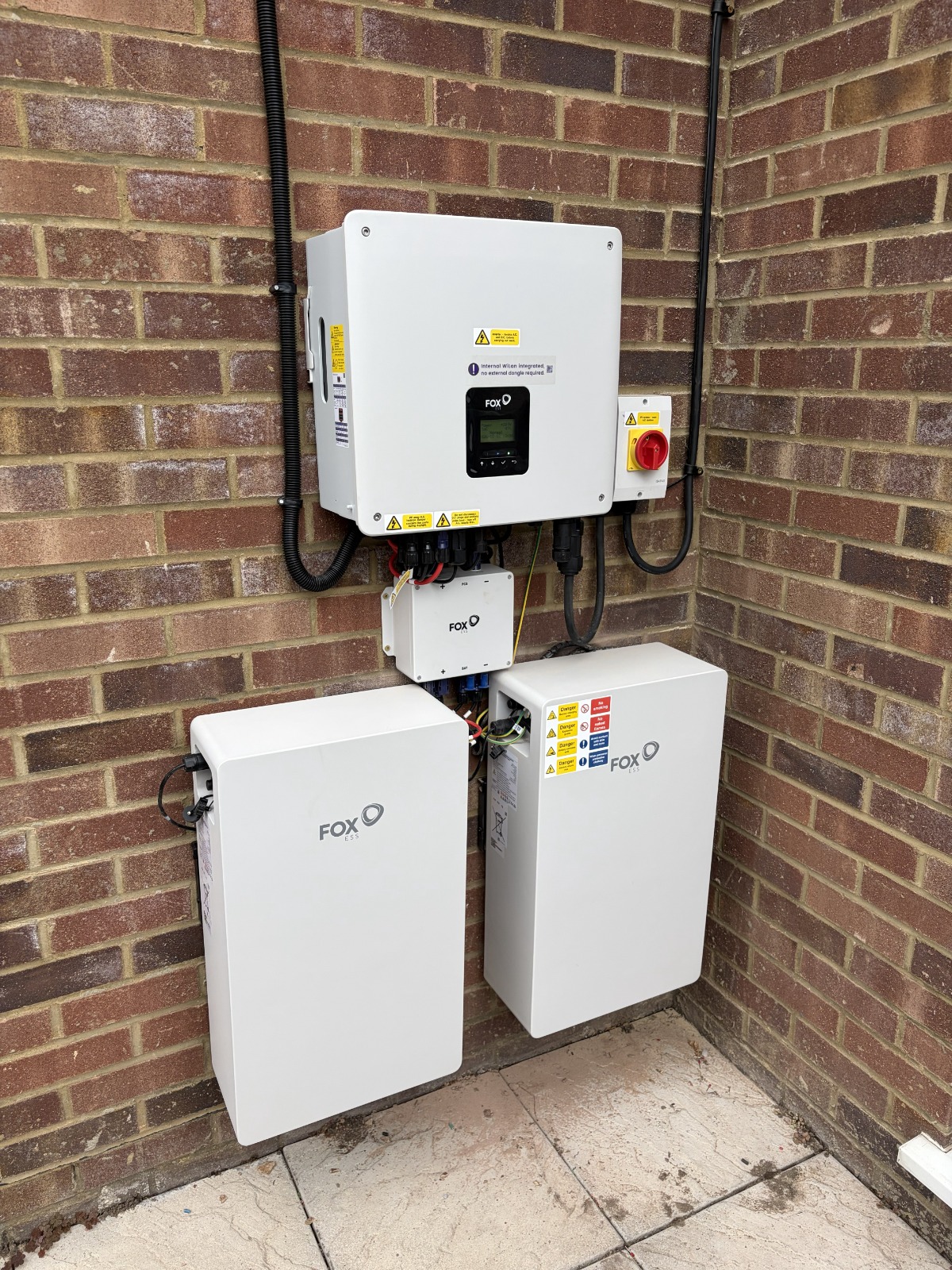
The Fox ESS EP6 and EP12 guide explains the battery range we install. Product selection should come from the surveyed design and compatibility checks, not from choosing the largest loan cap. Keep a copy of the proposed system specification so it can be compared with what is installed.
Once a lender has explained its process, keep the quotation, finance agreement, invoice, proof of purchase and MCS certificate together. Confirm who is responsible for each document. If the proposed work changes, ask the lender what must be updated before going ahead, rather than assuming the original application still covers it.
- Check your property is suitable - book a free survey
- Confirm your installer is MCS certified
- Choose a participating lender and apply to them directly
- Installation is completed and MCS verified
- The lender receives the government grant and your rate reflects it
Warm Homes Loan Scheme: frequently asked questions
The scheme rules and your lender's current product both matter. These answers separate the verified scheme position from an individual lending decision.
Is the Warm Homes Loan Scheme a grant or a loan?
It is a loan that the homeowner repays. Government grant support goes to the participating lender after the installation is verified, not directly to the homeowner.
How much can I borrow for solar panels?
The supported scheme cap for solar PV is up to £15,000. This is not a guaranteed lending amount or an installation quotation; approval and the amount offered depend on the lender's checks.
Does it cover battery storage?
Yes, the supported scheme cap for electrical battery storage is up to £15,000. The rules include standalone batteries and batteries paired with solar, subject to the lender's product and installation requirements.
Does it cover EV chargers?
An EV charger is eligible only as an ancillary cost within a qualifying solar or battery installation, not on its own. The chargepoint and installer must have the required OZEV approval, and the lender must confirm the proposed costs are eligible.
Does the Warm Homes Loan Scheme cover insulation?
No, insulation is not covered by the Warm Homes Loan Scheme. Windows, doors and roofing are also excluded, even if proposed alongside solar or battery work.
Who is eligible for the Warm Homes Loan Scheme?
Owner-occupiers of existing domestic properties and private rented sector landlords can be eligible. There is no government income threshold, but the lender applies credit, affordability and product checks and may decline the application or offer different terms.
When did the Warm Homes Loan Scheme start?
DESNZ published its scheme factsheet on 27 October 2026, and GOV.UK now provides lender and application guidance. That is a verified publication date, not confirmation of the exact opening day for every lender; check current availability directly.
What interest rate will I pay?
The lender sets your interest rate and terms. Government support is designed to reduce the lender's starting fixed rate by up to five percentage points for eligible loans of three years or more; the reduction can be smaller, and this is not a quoted rate or a guarantee.
Do I need an MCS certified installer?
Yes, scheme-supported solar and battery work requires an installer certified by MCS for the relevant technology and MCS-certified equipment. Completed work must be lodged and verified before the lender receives the government grant.
Is it available in Scotland, Wales and Northern Ireland?
Yes, the scheme covers eligible domestic properties across England, Scotland, Wales and Northern Ireland. Lender products and approval vary; Cozy Home Solutions provides installations in England and Wales only.
Updates
This guide is checked against official government sources. Publication dates are not used as a substitute for unverified scheme opening or closing dates.
- 3 November 2026 - Guide checked against the DESNZ factsheet, scheme rules and homeowner guidance; unverified opening and closing dates omitted.
- 27 October 2026 - DESNZ publishes the Warm Homes Loan Scheme factsheet.
See what your home qualifies for
Tell us a little about your property and we will come back to you with the measures that suit it and what a free survey would cover. No obligation.
Talk to an MCS certified installer
Talk to Cozy Home Solutions about suitable solar panels, battery storage, an EV charger or insulation for your home. Insulation is a separate service and is not covered by this scheme.
Unit 2, Old Station Yard, Watlington Road, Cowley, Oxford, OX4 6FE
0800 688 9666
admin@cozyhomesolutions.co.uk